Local Law 11 Repairs
MGR Restoration provides expert Local Law 11 (FISP) façade repair services tailored to meet New York City’s strict inspection and compliance requirements.
Under Local Law 11, buildings taller than six stories must undergo façade inspections every five years. These inspections are designed to identify unsafe conditions such as loose masonry, cracks, and structural deterioration that can pose risks to pedestrians and occupants.
If issues are found, timely repair is not optional. Property owners are required to take corrective action to maintain compliance and avoid violations, penalties, and potential safety hazards.
Our team works alongside engineers, property managers, and building owners to complete façade repairs efficiently, safely, and in full compliance with NYC regulations.
Got a project in mind? Let’s talk about bringing your construction vision to life.
Our Expertise Includes
Our Local Law 11 Repair Services
We provide comprehensive façade repair solutions required to address violations, correct unsafe conditions, and restore building exteriors to compliance.
Services Include:
What You Need To Know About Local Law 11
The Local Law 11 (FISP) Inspection Process
A Qualified Exterior Wall Inspector (licensed Professional Engineer or Registered Architect with façade inspection experience) must be retained.
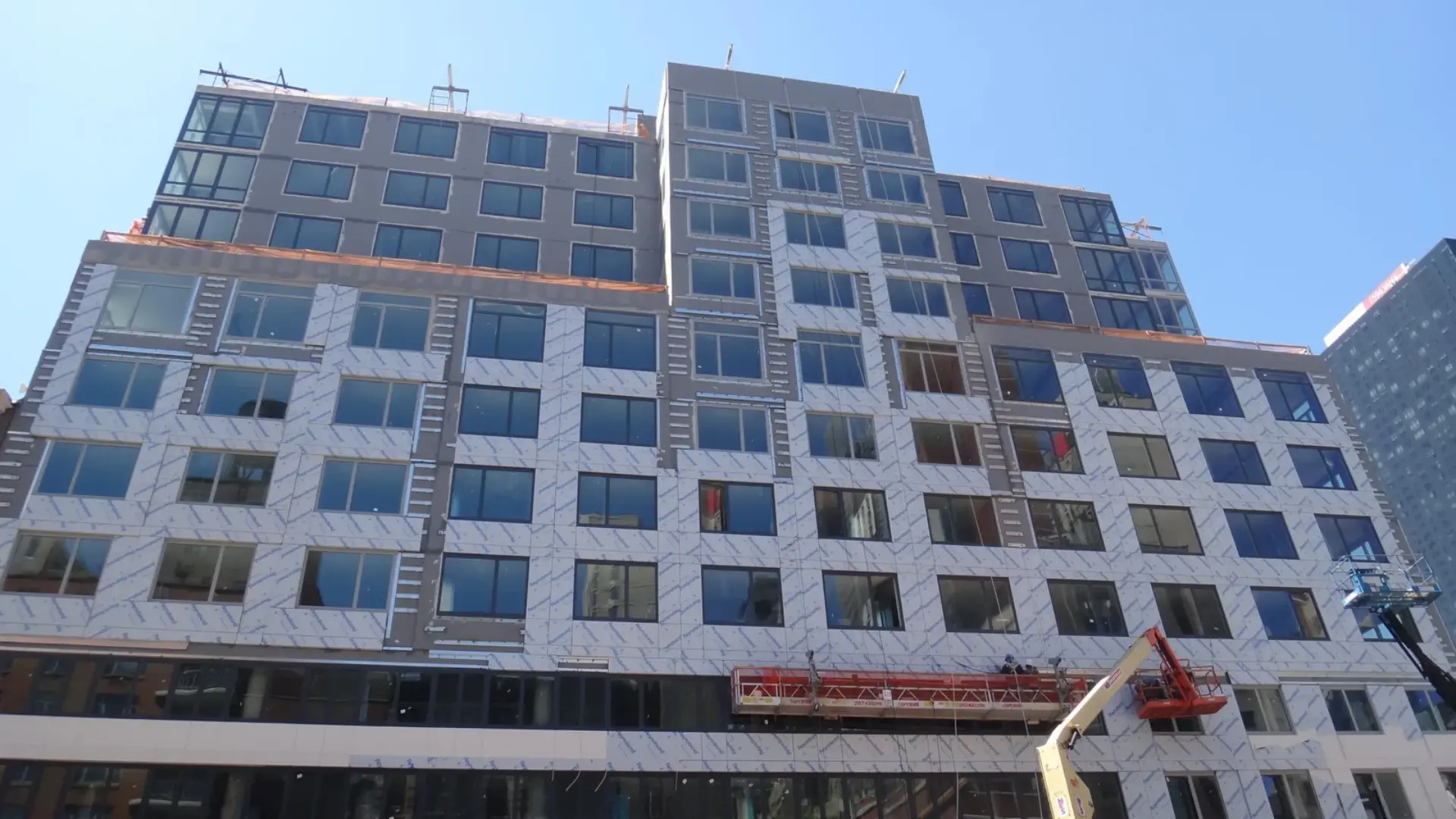
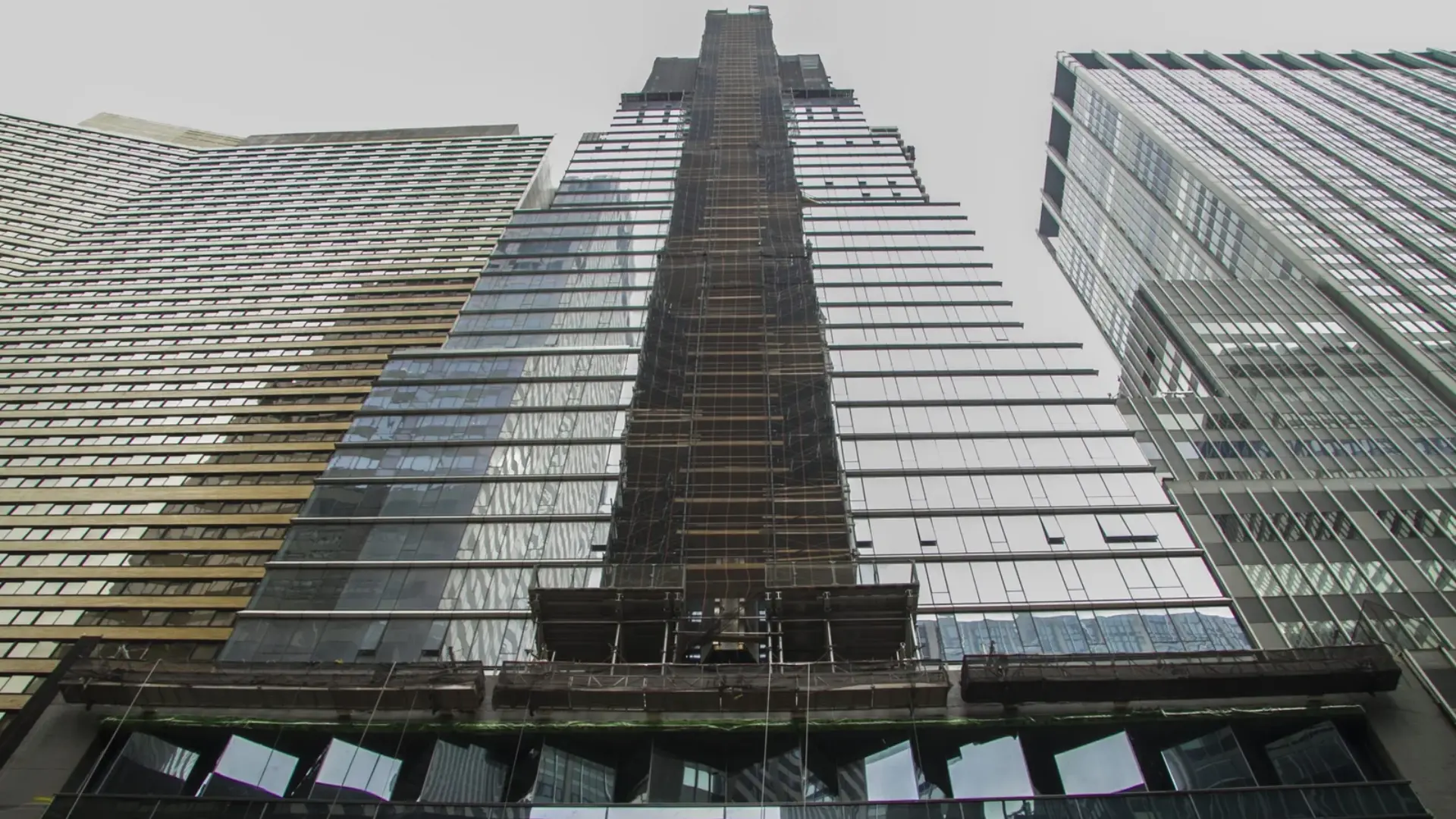
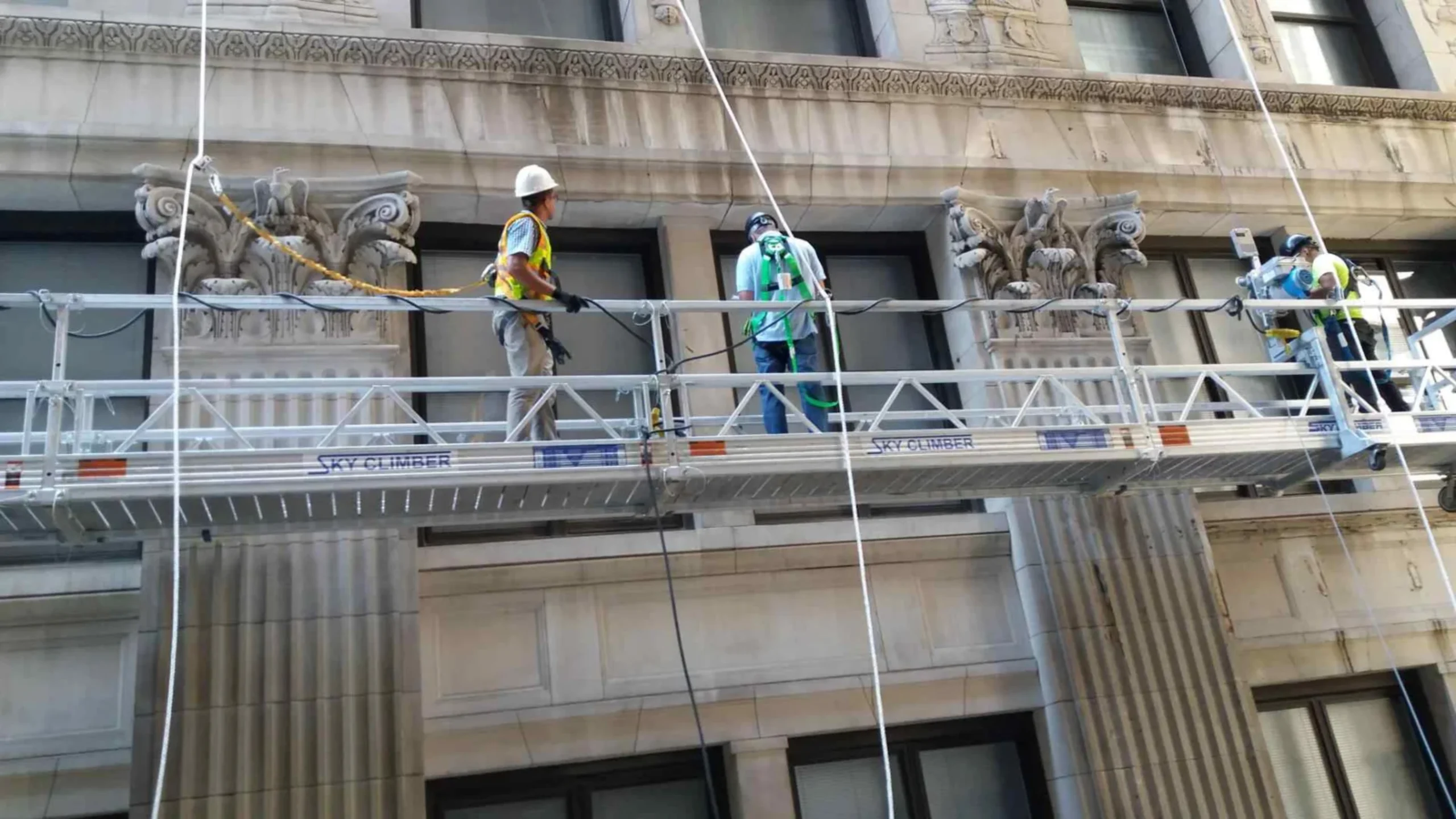
At least one“close-up” inspection (via scaffold, lift, or rope access) must be performed on a representative portion of each building façade. Inspections include visual checks, probing masonry joints, evaluating windows, lintels, cornices, balconies, parapets, water intrusion, and coatings.
After inspection, the QEWI files a report classifying the building as: SAFE: No work needed until next cycle.
SWARMP (Safe With a Repair and Maintenance Program): Defects that aren’t immediately hazardous but must be corrected within the current cycle.
UNSAFE: Conditions that pose immediate risks—repairs + pedestrian protection must be installed within 24 hours.
Reports are submitted via DOB NOW: Safety, along with fees.
The 5-Year Inspection Cycle
The current cycle is Cycle 10, which started on February 21, 2025. Cycle 11 is also underway for some sub-cycles. The deadlines for Cycle 10 are staggered by sub-cycle:
- Sub-cycle 10A: February 21, 2025–February 21, 2027 (for block numbers ending in 4, 5, 6, or 9).
- Sub-cycle 10B: February 21, 2026–February 21, 2028 (for block numbers ending in 0, 7, or 8).
- Sub-cycle 10C: February 21, 2027–February 21, 2029 (for block numbers ending in 1, 2, or 3).
New in FISP Cycle 10 (Amnesty)
The DOB Facade Unit has introduced an Amnesty program applicable to buildings for which FISP reports have not been filed in previous cycles.
In Cycle 10, buildings which have not filed FISP reports in previous cycles may file “early” Cycle 10 FISP reports for Sub-cycles 10B and 10C during Sub-cycle 10A, thereby stopping the clock on their Late Filing and No Report Filed (NRF) violations and penalties.
To take advantage of the Amnesty program, the building owner MUST pay all pending civil penalties accrued before the report is approved by the DOB Facades Unit.
The Amnesty program is outlined as follows:
- The building’s Cycle 9 status must be NRF (No Report Filed)
- The owner retains a QEWI (Qualified Exterior Wall Inspector) to conduct inspections, prepare and file a Cycle 10 report
- The QEWI uploads the report in DOBNOW
- Acceptable reports are conditionally accepted by the Facade Unit and civil penalties are assessed
- The owner pays the civil penalties within 10 days (failure to do so may result in incomplete filing or a rejected report and civil penalties continue to accrue)
- Once payment is received, the report receives final approval
- Please note that once the above Cycle 10 Amnesty program report is approved, the building reverts to the applicable Sub-cycle (A, B or C) in Cycle 11, which runs from 2030 – 2035.
Which Buildings Must Comply?
- The program applies to buildings greater than six stories in height, including buildings that are six stories above a basement and buildings that are six stories plus a “penthouse” floor. The program does not apply to buildings that are six stories above a cellar.
- A basement is a story partly underground but having more than one-half its clear height above the grade plane.
- A cellar is a story partly or wholly underground but having one-half or more of its clear height below the grade plane; cellars are not counted as stories in measuring the height of buildings. To confirm whether your building has a cellar or basement, check your Certificate of Occupancy.
- The program applies to all exterior walls on buildings situated on sloping sites that contain six (6) full stories plus one partial story, where more than half the height of that partial story is above existing grade and/or adjacent to open areas (e.g., areaways, yards, ramps).
Building Classified as Unsafe in Local Law 11:
- The program mandates a Critical Examination of the building’s exterior walls by a Qualified Exterior Wall Inspector (QEWI) during a two-year window within cycles occurring every five years. The DOB requires comprehensive facade examination and detailed reporting requirements with a description of observations and photographic evidence of inspections.
- All exterior walls of applicable buildings are subject to examination. (The only exemption is for walls less than 12 inches from the wall of an adjacent building.)
- Physical inspection requirements include examinations performed at intervals of not more than 60 feet on all walls fronting on a public right-of-way. All physical examinations shall occur along a path from grade to the top of an exterior wall using at least one scaffold drop or other observation platform configuration, including all exterior wall setbacks. “Public right-of-way” has been defined as any street, avenue, roadway, or other public place or public way.
- In Cycle 9 (and every second cycle thereafter), there is a specific focus on “cavity walls.” At minimum, a single probe at the location of each physical inspection will be required, and there must be an adequate number of probes to determine the presence, condition, and spacing of wall ties. The requirement for probes may be waived in certain limited cases, as defined in the Rule.
- Note: “Cavity walls” of the type often found on post-WWII apartment buildings, and other more recent masonry veneer type structures, are defined as “an exterior wall system consisting of an exterior veneer with a backup wall whereby the exterior veneer relies on a grid of metal ties to the backup wall for lateral stability. The two layers of wall are separated by an air cavity which may or may not be filled with insulation.”
Unsafe Conditions & Time Extensions
When the DOB has been notified of an UNSAFE condition (regardless of whether the UNSAFE report is based on a physically hazardous condition observed in the field or an unrepaired prior-cycle SWARMP condition described in a Critical Examination Report), compliance with 1 RCNY §103-04 requires the building owner do the following:
- Immediately install public safety measures such as a sidewalk shed, construction fence, etc., at the UNSAFE locations.
- Correct UNSAFE conditions within 90 days from the date the DOB was notified of the UNSAFE conditions.
- When the UNSAFE conditions have been corrected, file an Amended FISP Critical Examination Report with the DOB within 15 days.
- Most UNSAFE conditions cannot be corrected within the allotted 90 days. Therefore, the owner may file with the DOB for renewable “Extensions of Time.” The DOB will typically grant “Initial” and “Additional” extensions of up to 90 days, upon submission of forms FISP1 or FISP2 and a letter from an architectural or engineering firm describing the scope of work to be completed, the timetable for completion and confirmation that safety measures (e.g., sidewalk shed) are in place.
- Extensions are required to be renewed every 90 days, by requesting Additional Extensions, until the UNSAFE conditions have been satisfactorily corrected, and an Amended Critical Examination Report has been filed and accepted by the DOB.
For buildings categorized as UNSAFE, the QEWI must provide a recommended timeframe (MM/DD/YYYY) for repairs to be performed to bring the building to SWARMP or SAFE condition. It is the owner’s responsibility to notify the DOB of any deviation from the recommended timeframe, and/or provide a subsequent report by the QEWI, including supporting documentation justifying a request for a new timeframe. Timeframes of more than five years will not be permitted.
Compliance Deadlines
UNSAFE conditions:
- Immediate protection required (sidewalk shed, netting, fencing).
- Repairs must be completed within 90 days unless an extension is approved.
- Amended report must be filed within 2 weeks after repairs.
SWARMP conditions:
- Repairs must be completed before the end of the cycle.
- Failure to correct SWARMP before the next cycle automatically converts them into UNSAFE violations.
Filing Fees & Penalties
- Initial Filing Fee: $425 per façade report.
- Amended / Subsequent Filing: $85 each.
Penalties:
- Late filing → $250/month until report submitted.
- Failure to file → $1,000/year plus additional DOB enforcement.
- Failure to correct Unsafe → $1,000/month until issue resolved.
- Failure to install required pedestrian protection → $10/day.
Balcony & Guardrail Requirements
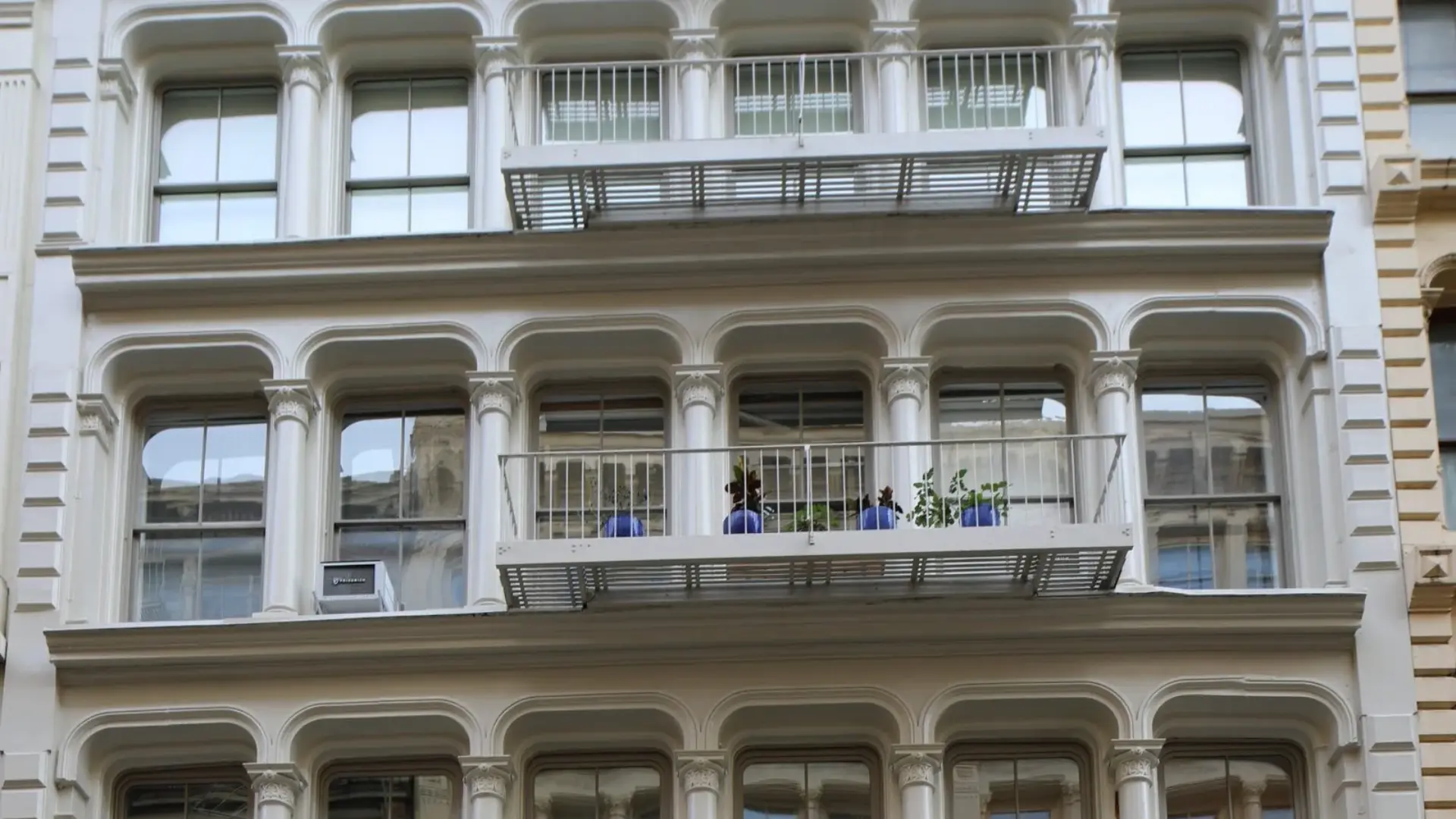
An April 2013 DOB amendment to Rule 103-04 imposed a new “fall protection” requirement that balcony railings and guards be inspected “to ensure that their components (balusters, intermediate railings and panel fillers) are positively secured against upward movement (e.g., by welds, bolts, or screws).”
In the context of FISP, “balcony” is used as a general term encompassing the entire balcony structure, including handrails, guards, railings, and connections.
The details of this inspection are outlined in the DOB Memo issued on May 5, 2014, which stipulates:
- All railings and guards must be inspected for both structural stability and code compliance.
- Code compliance will include inspection of the railings and guards with respect to codes in effect at the time they were installed or substantially altered.
- If the observations reveal that the balconies, handrails, or connections are UNSAFE, then the balcony, terrace, roof or other area must be vacated until the defective condition has been repaired and made SAFE
DOB NOW & Filing Process
In 2016, the DOB launched its DOB NOW: Safety web portal where all FISP actions occur online. Building owners, their representatives, and their QEWI’s conduct all facade-related interactions with each other, and with the DOB, through DOB NOW.
The DOB NOW Digital Filing Process:
- The QEWI, retained by the owner, conducts the critical examination of the building facades, railings, guards, and appurtenances, and prepares a FISP Critical Examination Report in the prescribed DOB NOW digital format.
- The QEWI uploads the Report, together with an electronic TR6 Technical Report form, and all required supporting documents (including the QEWI’s seal and signature), to DOB NOW as an “Initial Filing.” (In this case, “Initial Filing” means the first filing for the current Cycle). DOB NOW issues a tracking “Filing Number.”
- The owner (or owner’s representative) logs into DOB NOW and reviews the QEWI’s report.* If it is acceptable, the owner electronically signs the Owner’s Statement acknowledging his/her understanding of the QEWI’s report and certifying to the DOB that any SWARMP conditions from the previous cycle have been corrected. *To simplify the owner’s review of the report, MGR Restoration provides a PDF version of the FISP Report to our clients for review and comment.
- The owner pays the filing fee as well as any other required payments (e.g., Late Filing fees or other penalties when removing violations) online.
- The QEWI makes a final review of the filing, makes any necessary changes, confirms that fees have been paid, and transmits the completed report via DOB NOW.
- When the TR6/FISP Report has been successfully uploaded, DOB NOW will send an email notification to both the owner (or owner’s representative) and the QEWI with the following subject line: “Initial TR6 has been filed for 123 Main St with Filing Number TR6-1232456-8A-I1.”
- When the DOB has completed its review, DOB NOW will send an email to both the owner (or owner’s representative) and the QEWI notifying them that the Initial Filing has been accepted or rejected.
- In cases where the Initial Filing has been rejected, the DOB NOW email will include review comments, along with a note that an acceptable report must be filed within 45 days of the date of the email, in order to keep the current Initial Filing date and filing fee. The QEWI (and owner, when necessary) address the DOB NOW comments and re-submit the Initial TR6/FISP Report to DOB NOW.
- Once the Initial TR6/FISP report has been uploaded to DOB NOW, all subsequent compliance actions are filed in the system. These actions include: Subsequent or Amended Report and TR6 filings, UNSAFE notifications (FISP3), Initial and Additional Extension Requests (for unsafe repairs), sidewalk shed removals, and others.
What Inspectors Look For
- Cracks and movement in masonry
- Loose or deteriorated façade elements
- Water infiltration and damage
- Structural instability
Need to Address a Local Law 11 Requirement?
We look forward to speaking with you about your needs.
Façade Repairs Subservices
Let’s Start Work Together
48-11 69th Street
Woodside NY 11377